
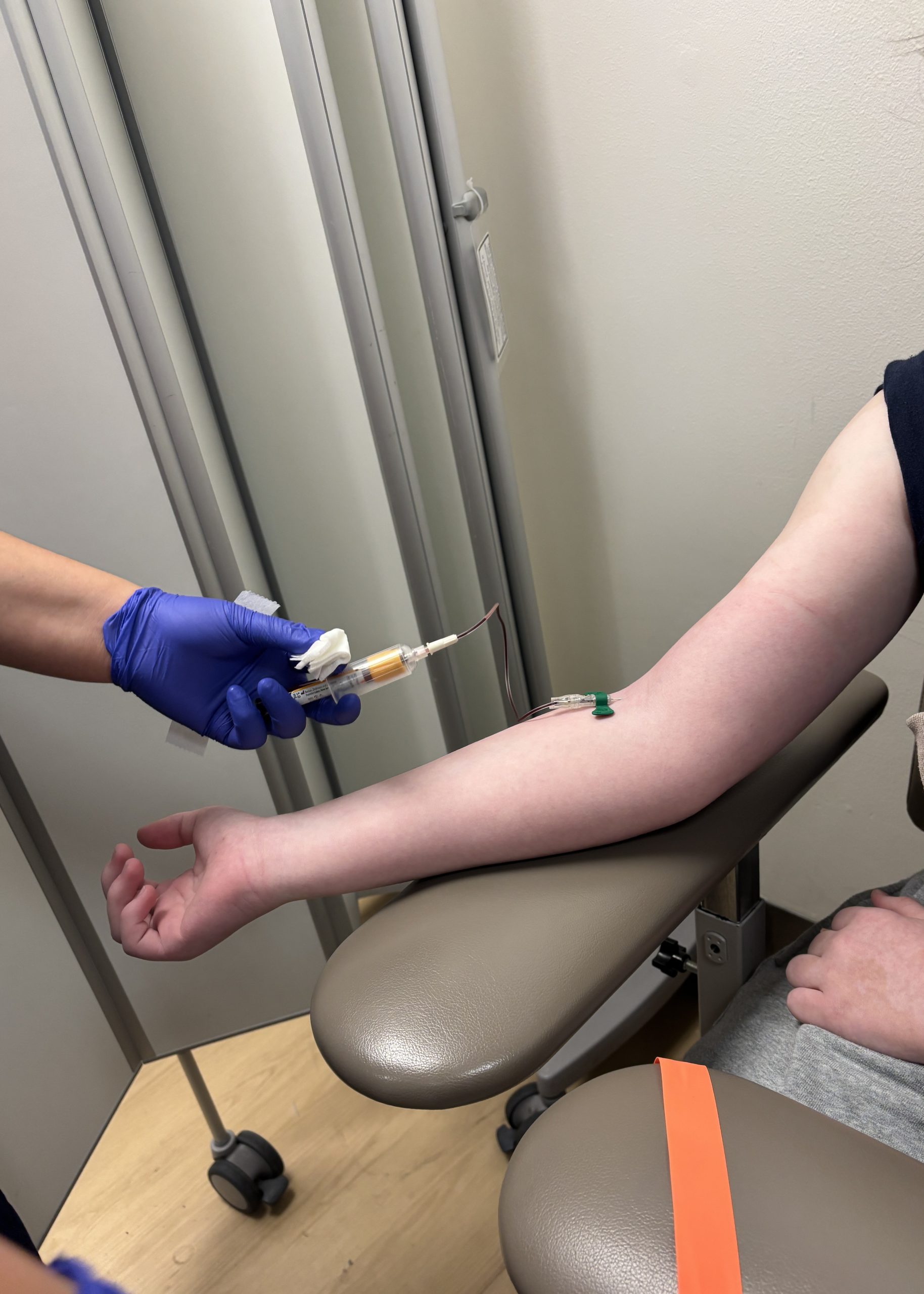
The most valuable sentence in medicine may be “we caught it early” — and for Crohn’s disease, it is a sentence doctors rarely get to say. The condition is typically diagnosed after months or years of symptoms, by which time intestinal inflammation has often already caused permanent damage. Research highlighted by the Crohn’s & Colitis Foundation now points to a different future: blood markers, measurable years before diagnosis, that could identify people on the path to Crohn’s while their bowel is still intact.
The studies draw on biobanks — frozen blood samples collected from healthy people who were followed for years, some of whom later developed inflammatory bowel disease. Working backwards from those diagnoses, scientists found immune and protein signatures in the pre-diagnosis samples that distinguished future patients from those who stayed healthy. Our health blog examines what a decade of warning would actually change.
The Diagnostic Delay Problem
Crohn’s symptoms — abdominal pain, diarrhoea, fatigue, weight loss — are common and non-specific. They are routinely attributed to stress, infection or irritable bowel syndrome, and patients often see several clinicians before anyone orders the endoscopy that settles the question. The National Institute of Diabetes and Digestive and Kidney Diseases notes that this delay is built into the disease’s presentation; by diagnosis, strictures and fistulas — complications that frequently require surgery — may already be established.
Each year of uncontrolled inflammation compounds the damage. A large share of patients eventually need bowel resection, and surgery in Crohn’s is rarely curative: inflammation tends to return at the surgical site, setting up a cycle of operations across a lifetime.
What Early Prediction Would Make Possible
A reliable predictive test rewrites the clinical sequence. High-risk individuals — the markers are especially informative in people with a family history — could enter monitoring programmes: periodic bloods, imaging and early endoscopy at the first molecular shift. Anti-inflammatory therapy, started at the pre-symptomatic or earliest symptomatic stage, has the best chance of keeping the bowel structurally normal for life.
The economics reinforce the medicine. Biologic drugs are expensive, but so are emergency admissions, operations, stoma care and decades of lost working life. Health systems already pay for predictive blood panels — cholesterol, glucose, thyroid — precisely because forecasting is cheaper than repair. Crohn’s has simply never had a forecast to buy.
The Road From Marker to Test
Caution is warranted. A statistical signature in banked samples is not yet a clinical test: the markers need validation in diverse populations, the false-positive rate must be understood, and screening people for a disease they may never develop raises real questions about anxiety, insurance and over-treatment. The history of biomarker research is littered with exciting signatures that faded under replication.
What Patients Say About Knowing
Bioethicists reviewing this research expected ambivalence from the patient community — a decade of foreknowledge is also a decade of worry. The consultations so far suggest the opposite. People who lived through the diagnostic odyssey describe the uncertainty years as the worst part of the disease, worse in memory than much of the treatment. Offered the counterfactual — a blood result at twenty-five, a monitoring plan, treatment at the first flicker — most say they would take the knowledge without hesitation.
That preference will shape how screening is eventually offered: not as a population-wide alarm, but as an opt-in pathway for those at elevated risk, wrapped in the counselling that turns a probability into a plan rather than a dread.
Still, the direction of travel is clear, and the patient community’s reaction has been striking: most people living with Crohn’s say they would rather have known. The coming years will show whether the blood can really see a decade ahead. We will track the validation studies here on our health blog.